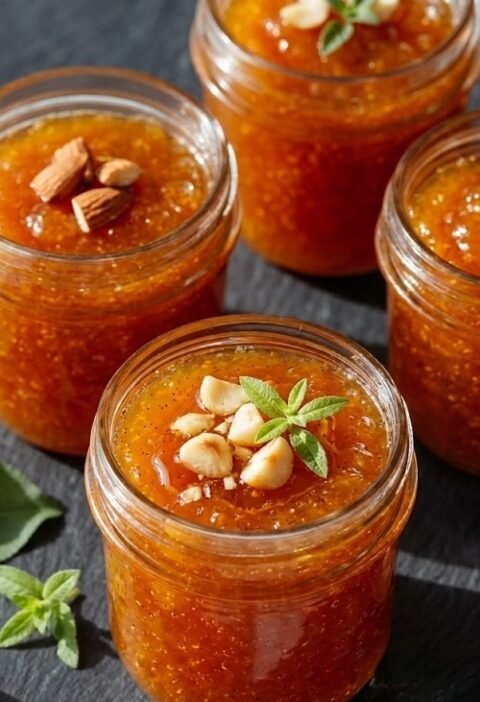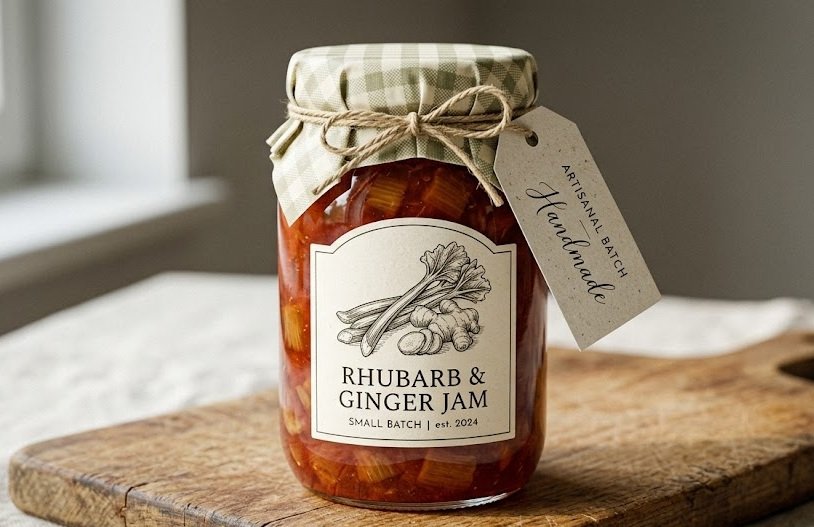
This rhubarb and ginger jam is a bright, tangy preserve with soft pieces of fruit and a gentle, warming heat from stem ginger. It sets to a glossy, spoonable texture that is perfect on toast, scones, and stirred into yogurt. It’s an easy, beginner-friendly jam as long as you take your time dissolving the sugar and testing the set. Total time is about 1 hour 30 minutes, plus cooling.
What This Jam Tastes Like
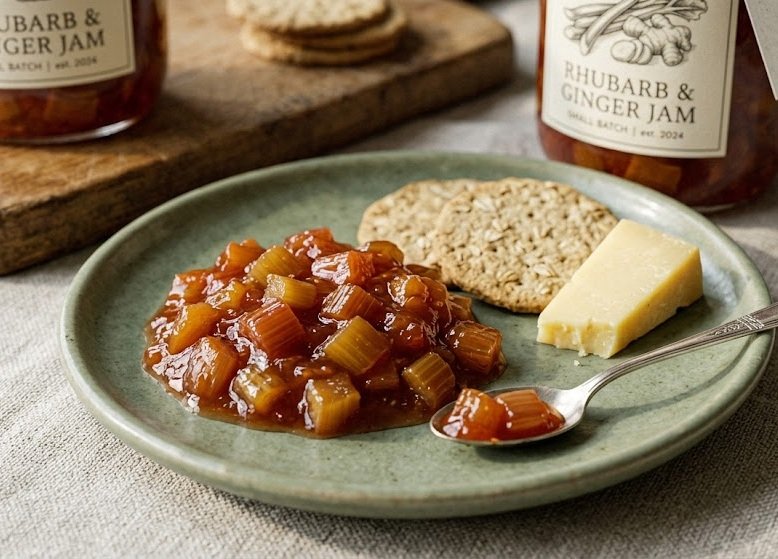
Rhubarb brings a sharp, fruity tang that turns beautifully jammy once cooked, and the ginger adds warmth without overpowering the fresh flavour. You’ll get soft pieces of rhubarb suspended in a rosy, glossy syrup, with a clean lemony finish. It’s sweet enough to preserve properly, but still pleasantly tart.
Ingredients
For the Jam
- 1kg rhubarb, trimmed and cut into 2cm pieces
- 1kg granulated sugar (or jam sugar)
- 50g stem ginger in syrup, finely chopped
- 2 tablespoons syrup from the stem ginger jar
- Juice of 1 large lemon
- 10g butter (optional, helps reduce foaming)
Helpful Equipment
- Large preserving pan or wide, heavy-based saucepan
- Wooden spoon and a heatproof spatula
- Sugar thermometer (recommended) or a chilled plate for the wrinkle test
- 4 sterilised jars (about 250ml each) with lids
- Ladle and funnel (optional, but makes filling much cleaner)
How to Make Rhubarb and Ginger Jam
- Prepare the oven: Preheat the oven to 140°C or 120°C fan. Wash the jars and lids in hot soapy water, rinse well, then place the jars (not the rubber or plastic parts) on a baking tray and warm in the oven for 15 minutes. Keep them warm until you’re ready to fill so the glass doesn’t crack.
- Prepare the fruit: Trim the rhubarb and cut into evenly sized 2cm pieces. This helps it cook at the same speed so you don’t end up with some pieces dissolving while others stay firm.
- Mix (macerate): Tip the rhubarb into your preserving pan with the sugar, lemon juice, chopped stem ginger, and ginger syrup. Stir well, then leave for 30 to 60 minutes. You’re looking for a puddle of pink juice in the bottom of the pan and sugar that looks damp and slushy.
- Cook gently to dissolve the sugar: Set the pan over low heat and stir patiently until every grain of sugar has dissolved. This can take 5 to 10 minutes. Rub a little liquid between your fingers or check the back of the spoon. If you can feel grains, keep going.
- Boil hard (the jam-making part): Once the sugar has dissolved, increase the heat and bring the jam to a full rolling boil. Boil for 10 to 15 minutes, stirring occasionally to prevent catching, until the fruit is tender and the liquid thickens. If you have a thermometer, aim for 105°C.
- Test the set: Put a couple of small plates in the freezer before you start cooking. To test, drop a teaspoon of jam onto a chilled plate, wait 30 seconds, then push it with your fingertip. If it wrinkles, it’s ready. If it runs like syrup, boil for 2 more minutes and test again.
- Skim and cool slightly: Take the pan off the heat. Stir in the butter (if using) to help the foam settle, then skim off any remaining froth with a spoon. Let the jam sit for 5 minutes so the fruit pieces suspend more evenly in the jars rather than floating to the top.
- Assemble (fill the jars): Carefully ladle the hot jam into warm sterilised jars, leaving about 0.5cm headspace. Wipe the rims clean, then seal with lids while hot. Set the jars aside to cool completely.
- Cool, label, and store: Once fully cool, label with the date. The jam will continue to thicken as it cools and will be properly set by the next day.
Tips
Why is my jam runny?
It simply has not reached setting point yet. Bring it back to a rolling boil for 2 minutes, then test again with the chilled-plate wrinkle test (or check for 105°C on a thermometer). Rhubarb can look loose while it’s hot, but it should thicken as it cools.
How do I stop sugar crystals forming?
Crystallisation usually comes from boiling before the sugar is fully dissolved. Keep the heat low at the start and stir until the liquid is completely smooth with no grains. Also avoid scraping sugar crystals from the side of the pan back into the jam.
How do I keep a brighter pink colour?
Cook the jam quickly once it reaches a rolling boil and avoid overcooking. A wide pan helps water evaporate faster, so you get a quicker set and a fresher colour.
Can I make it less gingery?
Yes. Reduce the stem ginger to 25g and keep the syrup to 1 tablespoon, or leave the syrup out completely for a cleaner rhubarb flavour.
Why is there foam on top, and does it matter?
Foam is normal in jam making. It won’t harm the jam, but it can leave a cloudy layer in the jar. Skim it off, or stir in a small knob of butter at the end to help it settle.
Serving Suggestions
- Spread thickly on buttered toast or crumpets
- Spoon into yogurt, porridge, or overnight oats
- Serve with scones and clotted cream
- Use as a filling for Victoria sponge, thumbprint biscuits, or jam tarts
- Warm a spoonful and drizzle over vanilla ice cream
Storage
Room Temperature
Store sealed, unopened jars in a cool, dark cupboard for up to 12 months. Once opened, keep the jar in the fridge.
Refrigerator
After opening, refrigerate and use within 4 to 6 weeks. Always use a clean spoon to keep the jam at its best.
Freezing
You can freeze jam in freezer-safe containers for up to 6 months. Leave a little headspace for expansion. Thaw overnight in the refrigerator and stir well before using.
Nutrition
- Calories: 55 kcal
- Carbohydrates: 14 g
- Protein: 0 g
- Fat: 0 g
- Saturated fat: 0 g
- Sodium: 2 mg
Disclaimer: Nutrition values are estimates and will vary depending on ingredients and portion size.
FAQs
Can I use frozen rhubarb for jam?
Yes. Thaw it first and tip everything (including the juices) into the pan. Frozen rhubarb is softer, so the jam may cook and reach setting point a little faster, so start testing early.
Do I need jam sugar or pectin for rhubarb and ginger jam?
Not always. Rhubarb is lower in pectin than some fruits, but the lemon juice helps and the fast boil encourages a good set. If you want extra insurance, use jam sugar or add 1–2 tablespoons of powdered pectin and follow the packet instructions.
How do I know when the jam is set without a thermometer?
Use the chilled-plate wrinkle test. Drop a teaspoon of jam onto a plate from the freezer, wait 30 seconds, then push it with your finger. If it wrinkles and doesn’t flood back, it’s ready. If it runs, boil for 2 more minutes and test again.
Why did my jam turn out too thick?
It was boiled past setting point. You can often rescue it by warming the jam gently with a splash of water (1–2 tablespoons per jar), then re-jarring. Heat just until loosened, not to a full boil.
Can I reduce the sugar in this jam?
For a traditional long-keeping jam, the sugar ratio matters for both set and preservation. If you want to reduce sugar, use a low-sugar pectin and follow a tested recipe designed for reduced sugar jams, then store it in the fridge and use sooner.
How long should I leave the rhubarb and sugar to macerate?
30 to 60 minutes is ideal. It helps draw out juice so the sugar dissolves gently without catching. If you’re short on time you can skip it, but keep the heat very low at the start and stir more often.
Rhubarb and Ginger Jam
Course: CondimentCuisine: BritishDifficulty: Easy4
jars15
minutes25
minutes90
minutes55
kcal40
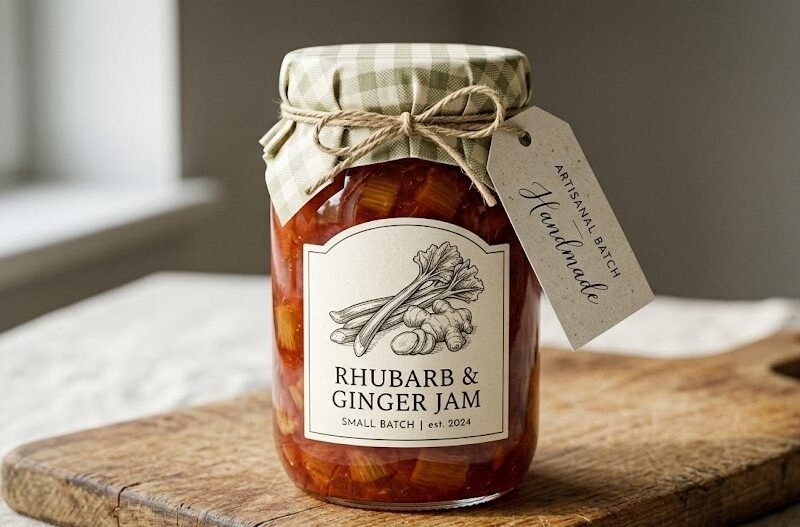
minutesA classic British-style rhubarb and ginger jam with a bright tang, soft fruit pieces, and warming stem ginger. Easy to make, perfect for toast, scones, and gifting.
Ingredients
1kg rhubarb, trimmed and cut into 2cm pieces
1kg granulated sugar (or jam sugar)
50g stem ginger in syrup, finely chopped
2 tbsp syrup from the stem ginger jar
Juice of 1 large lemon
10g butter (optional, helps reduce foaming)
Directions
- Heat the oven to 140°C (120°C fan). Wash jars and lids, then warm the jars in the oven for 15 minutes to sterilise.
- Put the rhubarb, sugar, lemon juice, chopped stem ginger, and ginger syrup into a large preserving pan. Leave for 30–60 minutes so the sugar starts drawing out the juices.
- Place the pan over low heat and stir gently until the sugar has completely dissolved (no grains on the spoon).
- Increase heat and boil rapidly for 10–15 minutes until setting point is reached (105°C) or the wrinkle test is passed.
- Stir in the butter if using, skim off any foam, then ladle into warm jars. Seal, cool, and label.
Notes
- Always dissolve the sugar fully before boiling to avoid crystals.
- Start testing for set after 10 minutes of rolling boil (rhubarb sets quickly).
- For a smoother jam, gently mash the fruit near the end of cooking.
- Use a thermometer (105°C) or the chilled-plate wrinkle test for accuracy.