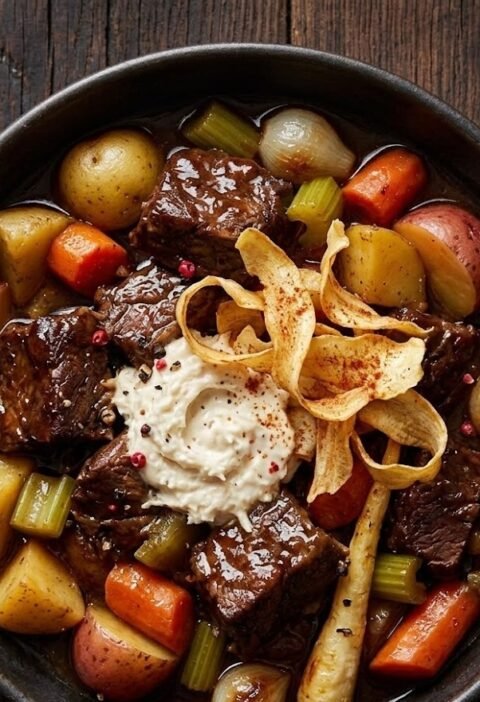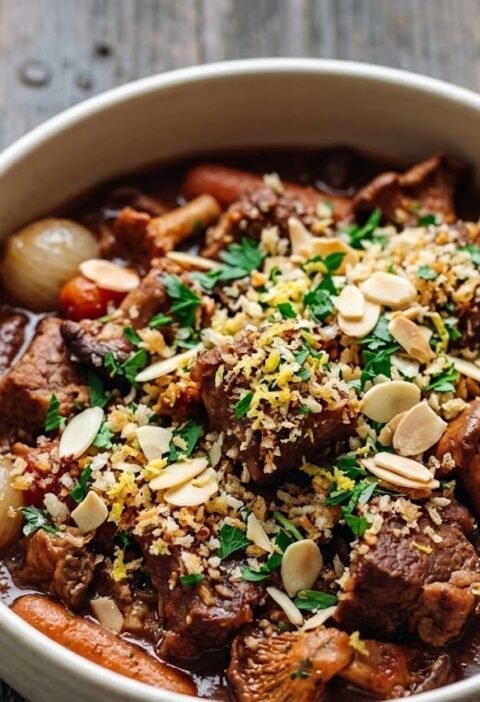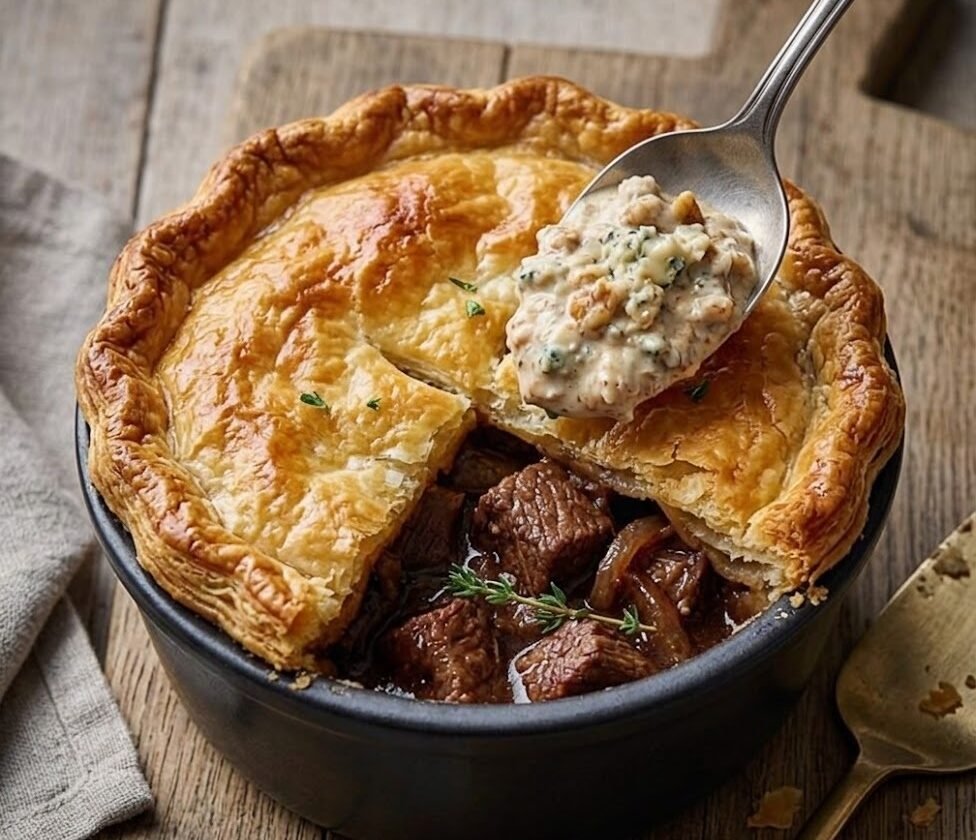
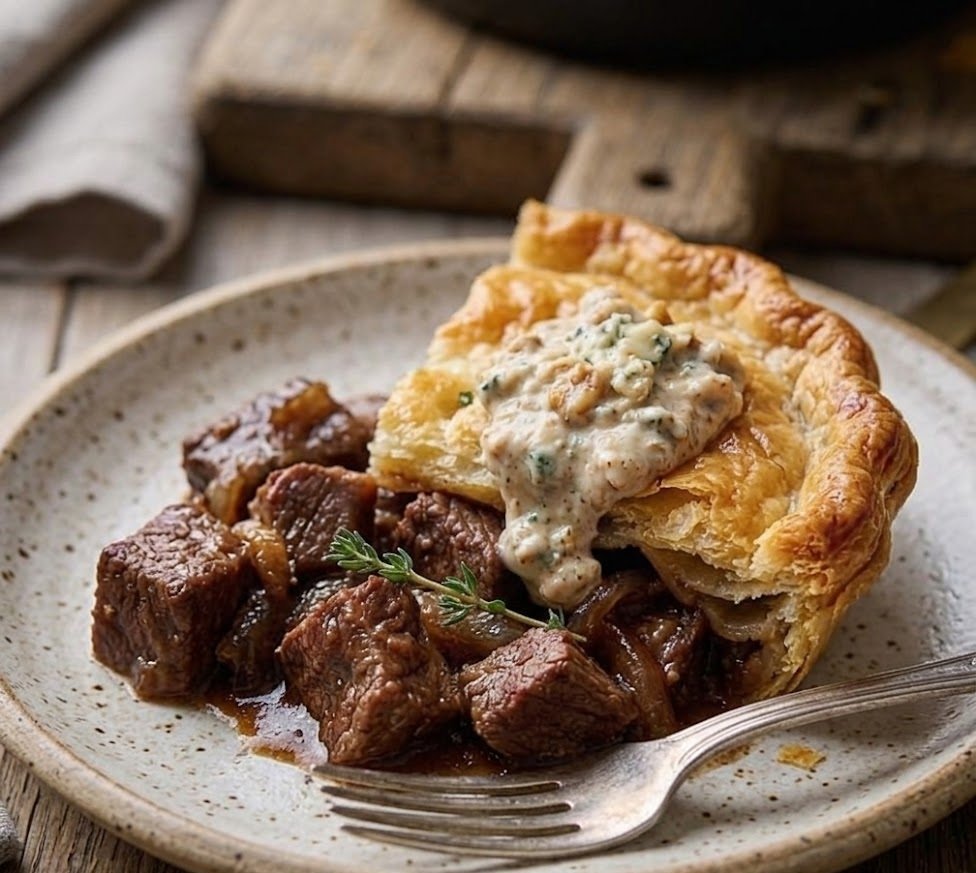
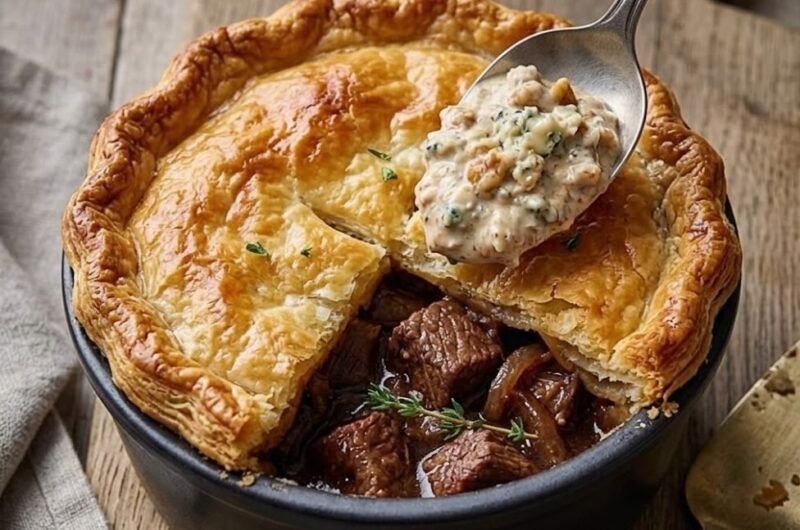
This Mary Berry-style steak and Guinness pie is proper comfort food: tender chunks of beef in a rich, dark gravy with the unmistakable malty depth of Guinness, all tucked under a crisp, golden puff pastry lid. The filling turns silky and savoury after a slow cook, while the pastry stays light and flaky with just the right amount of crunch. It’s a medium-difficulty recipe, but every step is straightforward and beginner-friendly. Set aside about 3 hours 20 minutes total, most of it hands-off simmering time.
Ingredients
For the steak and Guinness filling
- 2 tbsp plain flour
- 1 tsp fine salt
- 1/2 tsp freshly ground black pepper
- 900g braising steak (chuck), cut into 3cm cubes
- 2 tbsp sunflower or vegetable oil
- 2 large onions, sliced
- 2 medium carrots, diced
- 2 garlic cloves, crushed
- 2 tbsp tomato purée
- 2 tbsp Worcestershire sauce
- 1 tbsp fresh thyme leaves (or 1 tsp dried thyme)
- 1 bay leaf
- 440ml Guinness (1 can)
- 400ml beef stock (from 1 stock cube/pot)
- 200g chestnut mushrooms, quartered (optional)
For the pastry topping
- 320g ready-rolled puff pastry (or about 350g block puff pastry, rolled to a 3–4mm thickness)
- 1 egg, beaten (for glazing)
For the dish
- A little butter or oil, for greasing
How to Make Mary Berry Steak and Guinness Pie
- Prepare the oven: Preheat the oven to 160°C or 140°C fan for the slow cook (or plan to simmer on the hob). Later, you’ll turn the oven up to 200°C or 180°C fan to bake the pie. Place a shelf in the middle so the pastry colours evenly.
- Coat the beef: In a large bowl, mix the flour, salt and pepper. Add the beef and toss well so every piece is lightly coated. This helps thicken the gravy as it cooks.
- Brown the steak: Heat 1 tablespoon of oil in a large, heavy casserole or deep pan. Brown the beef in 2–3 batches for 4–5 minutes per batch, turning until well coloured. Lift out onto a plate.
- Soften the vegetables: Add the remaining oil to the pan, then add the onions and carrots. Cook for 8–10 minutes, stirring, until the onions are soft and starting to take on colour. Stir in the garlic for 30 seconds.
- Build the gravy: Stir in the tomato purée, Worcestershire sauce, thyme and bay leaf. Pour in the Guinness, scraping up any browned bits from the bottom of the pan. Add the stock and return the beef (and any juices) to the pan. If using mushrooms, stir them in now.
- Slow cook until tender: Bring to a gentle simmer, cover with a lid, then cook either in the oven for 1 hour 45 minutes to 2 hours, or on the hob on the lowest heat for a similar time. The beef is ready when it yields easily to a fork and the sauce looks glossy and rich.
- Cool the filling: Tip the filling into a wide dish (or leave in the pan) and let it cool for 20–30 minutes. Warm filling melts the butter in the pastry and can lead to a soggy, shrunken lid, so don’t rush this step.
- Assemble the pie: Turn the oven up to 200°C or 180°C fan. Grease a 1.5–2 litre pie dish and spoon in the filling. Lay the puff pastry over the top, trim the edges, then crimp to seal. Cut a small cross or a couple of slits in the centre to let steam escape, then brush with beaten egg.
- Bake: Bake for 30–35 minutes, until the pastry is puffed, crisp and a deep golden brown. If it’s colouring too quickly, cover loosely with foil for the last 10 minutes.
- Rest and serve: Leave the pie to stand for 10 minutes before serving. This gives the gravy a moment to settle so it slices and serves more neatly.
Tips
How do I stop the pastry going soggy?
Let the filling cool before topping, and make sure it is thick and glossy rather than watery. A quick simmer uncovered for 10–15 minutes will reduce excess liquid. Cutting a couple of steam vents in the pastry also helps keep it crisp.
Why is my beef still tough after cooking?
It usually just needs more time. Keep the heat low and gentle and cook until the beef yields easily when pressed with a fork. Toughness is often a sign it was simmered too quickly or not long enough.
How can I thicken the gravy if it’s too thin?
Simmer the filling uncovered until reduced. If you need extra help, mix 1 tsp cornflour with 1 tbsp cold water and stir it in while simmering, a little at a time, until it reaches a pie-friendly consistency.
Can I make it more family-friendly?
Guinness bitterness mellows as it cooks, but you can soften the flavour by using half Guinness and half extra stock. Serving with buttery mash or peas also balances the richness nicely.
Serving Suggestions
- Creamy mashed potatoes and buttered peas
- Roasted carrots and parsnips
- Steamed greens with a little mustard butter
- Chips and a crisp green salad for a pub-style plate
Storage
Room temperature
Let the pie cool, then keep it covered at cool room temperature for up to 2 hours. After that, refrigerate for food safety.
Refrigerator
Store leftovers in an airtight container for up to 3 days. Reheat in a 180°C fan oven until piping hot throughout (the oven keeps the pastry crisper than the microwave).
Freezing
You can freeze the cooked filling (without pastry) for up to 3 months. Defrost overnight in the fridge, reheat until hot, then add fresh pastry and bake. Fully baked pie can also be frozen, but the pastry may lose some crispness when reheated.
Nutrition
- Calories: 620 kcal
- Carbohydrates: 34 g
- Protein: 38 g
- Fat: 34 g
- Saturated Fat: 12 g
- Sodium: 980 mg
Nutrition values are estimates and will vary depending on the exact ingredients and brands used.
FAQs
What cut of beef is best for steak and Guinness pie?
Braising cuts with marbling work best, such as chuck, blade, or stewing steak. They soften slowly and turn beautifully tender, while lean cuts tend to dry out and stay firm.
Can I make steak and Guinness pie ahead of time?
Yes. Make the filling 1–2 days ahead, cool it, then refrigerate. Assemble with puff pastry and bake on the day for the crispest topping. If the filling is very cold, add 5 minutes to the bake time.
Can I use shortcrust pastry instead of puff pastry?
You can. Shortcrust gives a more traditional, sturdy finish. Blind-bake a shortcrust base if you’re lining the dish to prevent sogginess, then add the filling and top as usual.
Why does my Guinness pie taste bitter?
Guinness is naturally bitter, but it should mellow during a long, gentle cook. A pie can taste bitter if it hasn’t reduced enough or if the heat was too high. Next time, cook low and slow and taste near the end; a small extra splash of stock can also round it out.
How do I reheat steak and Guinness pie without ruining the pastry?
Reheat in the oven rather than the microwave. Cover loosely with foil and warm at 180°C fan until hot throughout, then uncover for the last 5–10 minutes to re-crisp the pastry.
Mary Berry Steak and Guinness Pie Recipe
Course: MainCuisine: British, IrishDifficulty: Medium6
people25
minutes2
hours35
minutes200
minutes620
kcal3
hoursTender beef braised in Guinness with onions, carrots and thyme, topped with a crisp puff pastry lid. A rich, pub-style pie that feels special but is very doable at home.
Ingredients
2 tbsp plain flour
1 tsp fine salt
1/2 tsp freshly ground black pepper
900g braising steak (chuck), cut into 3cm cubes
2 tbsp sunflower or vegetable oil
2 large onions, sliced
2 medium carrots, diced
2 garlic cloves, crushed
2 tbsp tomato purée
2 tbsp Worcestershire sauce
1 tbsp fresh thyme leaves (or 1 tsp dried thyme)
1 bay leaf
440ml Guinness (1 can)
400ml beef stock (from 1 stock cube/pot)
200g chestnut mushrooms, quartered (optional)
320g ready-rolled puff pastry (or 350g block, rolled)
1 egg, beaten (for glazing)
A little butter or oil, for greasing the dish
Directions
- Toss the beef in flour, salt and pepper.
- Brown the beef, then soften the onions and carrots in the same pan.
- Stir in garlic, tomato purée, Worcestershire, thyme and bay.
- Add Guinness and stock, then simmer gently until the beef is very tender.
- Cool the filling slightly, then spoon into a greased pie dish.
- Top with puff pastry, crimp, cut vents and egg-wash.
- Bake at 200°C (180°C fan) until puffed and deep golden.
- Rest 10 minutes before serving so the gravy settles.
Notes
- Cooling the filling before adding pastry helps stop a soggy bottom and prevents the pastry sliding off.
- Brown the beef in batches for better colour and a richer gravy.
- If the sauce is thin, simmer uncovered for 10–15 minutes before topping with pastry.
- Oven temperatures vary: if the pastry colours too fast, tent loosely with foil for the last 10 minutes.